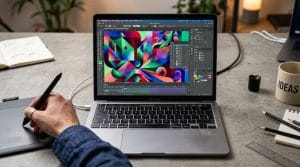
A survey in the New York Post caught my eye this week. It found that small business owners — people juggling multiple companies or just wearing too many hats — are turning to AI for creative tasks. Writing, design, social media posts, that kind of thing. And honestly, it matched what I’ve been noticing lately with AI art and graphic design work.
I’m not going to pretend I have all the answers. But I’ve been watching this play out up close, and I think it’s worth talking through what’s actually happening versus what the headlines make it sound like.
What the Survey Actually Said About AI and Creative Tasks

The basic finding was pretty simple. Small business owners are stretched thin, and AI tools are filling gaps. Creative tasks specifically — writing product descriptions, drafting social captions, generating rough visuals — are where a lot of people are trying to buy back some time.
That makes sense. Creative work used to mean hiring someone, waiting on a freelancer, or just skipping it altogether. Now you can get something on the screen fast. For a solo operator managing two or three small businesses at once, that’s genuinely useful.
But “useful” and “finished” aren’t the same thing. That’s the part that tends to get glossed over.
What I’ve Actually Been Noticing with AI Art and Graphic Design

Here’s what I keep seeing. Someone uses an AI tool to write their website copy or generate a logo concept. It comes out okay — not bad, not great. They publish it because they needed something done. Six months later, they can’t figure out why their brand feels a little flat, or why the copy doesn’t quite sound like them.
The AI gave them a starting point and they treated it like a finish line. That’s an easy mistake to make when you’re busy.
I’ve also noticed a backlash building. People are getting better at spotting AI-generated content — writing that’s a little too smooth, images that look almost right but slightly off. A well-known magazine published an AI-generated cover recently, and the reaction was loud and pretty immediate. “Hire a damn artist” was one of the more printable responses.
Your audience notices more than you might think. That’s not me being dramatic — it’s just what’s happening right now.
Should Small Businesses Use AI for Creative Work?
So where does that leave you? Somewhere in the middle, honestly.
AI is genuinely good for some things. First drafts. Brainstorming. Getting ideas out of your head fast. If you use it to sketch out a social post and then rewrite it in your own voice, that’s a smart use of the tool. You’re still the one making the judgment call.
Where it tends to fall apart is when AI output goes straight to publish — no editing, no real thought about whether it sounds like your business or speaks to your specific customers. Speed is nice. But putting something generic in front of your audience because it was free and fast has a cost. It’s just a slower, quieter one.
The businesses I see doing this well use AI as a tool in the process, not as a replacement for the process. There’s a real difference. If you’re thinking through how AI fits into your overall content and branding approach, the GV blog has more on that — practical stuff, not hype.
Questions I’ve Been Hearing Lately
Is it wrong to use AI for creative tasks?
No. Not at all. Almost every tool that makes work faster gets adopted eventually. The question is whether you’re using it thoughtfully or just outsourcing your judgment along with the task.
Can people really tell when something is AI-generated?
More and more, yes. Not always, and not everyone. But people’s sensitivity to it is growing fast. If your brand depends on feeling personal or trustworthy, that’s worth paying attention to.
Should I stop using AI tools entirely?
That’s probably overcorrecting. The more useful question is: which parts of your creative work actually benefit from a human voice, and which parts are just logistics? Use AI for the logistics. Keep the human voice where it matters.
What kinds of creative work hold up best when a human does them?
Anything where your specific personality, your story, or your relationship with customers is part of the appeal. That’s hard to fake. Think about your About page, your customer emails, anything that asks someone to trust you before they buy.
Where Is AI for Small Business Creative Work Headed?
A lot of small business owners are in an experimentation phase right now — trying tools, seeing what sticks, figuring out where the time savings are real and where they’re not. That’s healthy.
What I’ll be watching is whether the pushback against AI-generated content keeps growing, especially in industries where trust matters most. Health, food, services, local businesses — these are places where people want to feel like they’re dealing with a real person who cares. AI can support that. It can also quietly undermine it if you’re not paying attention.
There’s also a real question about what happens as these tools get more capable. The gap between “AI draft” and “finished, polished, on-brand work” is still pretty wide. I don’t think that gap closes as fast as some people are expecting — but I’ve been wrong before, and I’ll keep watching.
For now, the smartest move is probably the same one it’s always been. Know what you’re doing and why. Don’t do it just because it’s fast or free. And stay honest with yourself about whether the output actually represents your business well.